

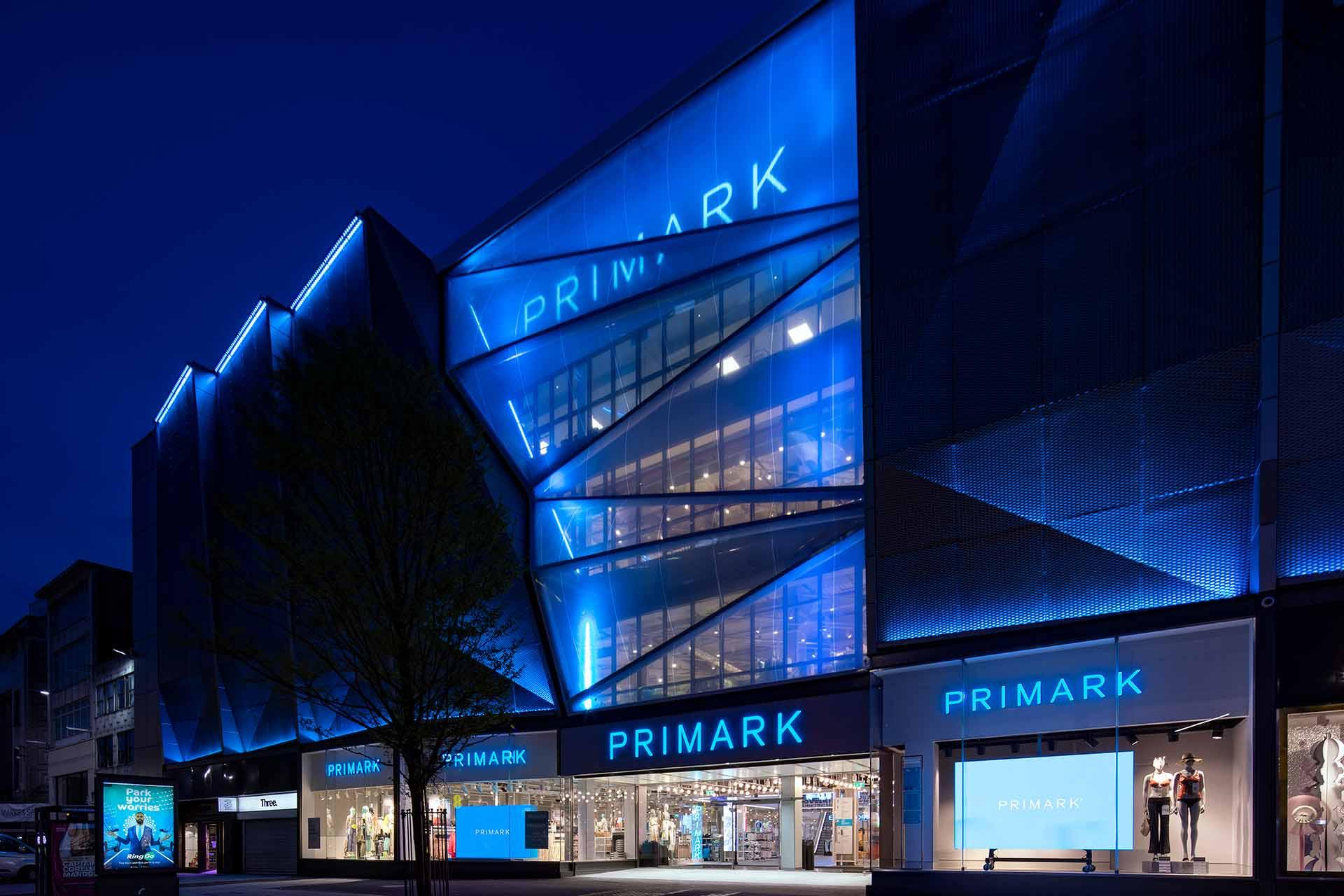

.jpg)
.jpg)


Follow us on
A large retailer is opening near one of your stores. Before you've even seen the planning notice, you're already doing the maths: how many of your customers will they take? How much of your foot traffic will disappear?
That reaction is natural. It's also, in many cases, wrong.
Whether a new competitor hurts or helps your store depends on factors most retailers never measure, the type of retail environment, the distance, the competitor's footfall profile, and how your catchment areas overlap. The Primark Effect is the clearest real-world case study we have for answering this question with actual data. We analysed three recent Primark openings across the UK, France, and Spain to find out what really happens to the stores around them.
What Is the Primark Effect?
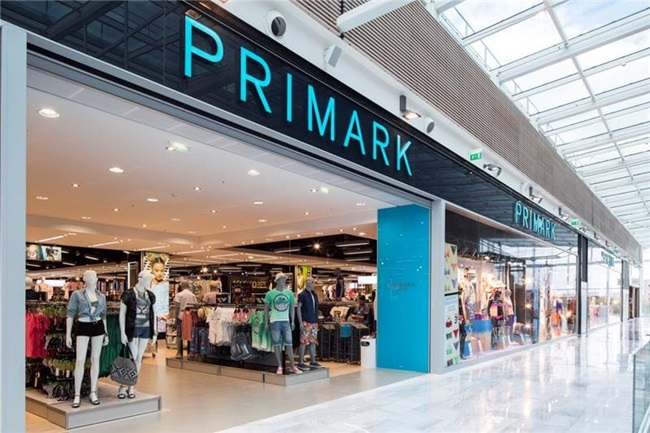
The Primark Effect refers to a dual phenomenon that plays out whenever a new Primark store opens. On one hand, the opening pulls a significant volume of shoppers into the immediate area, people who might not have visited that location otherwise. On the other hand, those same visitors are largely absorbed by Primark itself, potentially at the expense of retailers sitting just outside the high-traffic radius.
Two forces. Both plausible. But which one dominates in practice?
To find out, we used Gini by MyTraffic to compare foot traffic before and after three recent Primark openings:
- Trafford Palazzo, Manchester (UK), opened August 2025
- L'Heure Tranquille, Tours (France), opened December 2024
- La Vaguada, Madrid (Spain), opened February 2024
For each location, we compared heatmap data year-over-year to measure how foot traffic shifted at the mall level following the opening.
What the Data Actually Shows
The short version: Primark brings people. Every single opening we studied produced a measurable increase in foot traffic across the surrounding mall, not just in front of the Primark store itself.
The magnitude varied significantly by market:
- UK (+5%): A modest but real lift at Trafford Palazzo in Manchester. This is already one of the busiest retail destinations in the north of England, the baseline is high, which makes a 5% gain meaningful in absolute terms.
- France (+28.7%): A sharp increase at L'Heure Tranquille in Tours, visible across the entire mall footprint from January 2024 to January 2025.
- Spain (+29.4%): Near-identical story at La Vaguada in Madrid, with traffic rising steeply in the year following the opening.
In all three cases, the nearby traffic hotspots, the areas that were already drawing shoppers before Primark arrived, did not shrink. The fear that Primark would "steal" existing traffic from neighboring zones didn't materialize in these mall environments.
The traffic-stealing half of the theory may be real, but it shows up differently depending on context. Mall retail creates a closed loop: once someone is inside, they tend to browse beyond their original destination. A Primark opening brings new visitors into that loop, and nearby tenants benefit. High street retail is a different story, there, footfall is more linear and zero-sum, and a dominant anchor store can genuinely redirect pedestrian flows away from neighboring independents.
If Primark is opening near your high-street store, the picture is less clear-cut. If it's a mall opening, the data suggests you're more likely to gain than lose.
What This Means for Your Store
Understanding the Primark Effect isn't just interesting context, it changes how you should think about your retail environment day-to-day.
Your neighbors are a variable in your performance, whether you manage that variable or not.
Most retailers treat location as a fixed decision: you open, you operate, you measure. But your catchment area is constantly changing. New openings, closures, anchor tenant reshuffles, each one redistributes foot traffic around you. The retailers who outperform aren't necessarily in better locations; they're the ones who know what's happening in their area before it affects their numbers.
Anchor tenant proximity is one of the most underused levers in retail network strategy. Shopping center managers specifically recruit footfall magnets like Primark, H&M, or Zara because they know these brands attract visitors who then disperse through the rest of the center. If you're evaluating a new site, one of the first questions to ask is: who are the anchor tenants, and what does their traffic profile look like? A location next to a high-draw anchor in a mall is structurally different from the same square footage in an isolated retail park.
When a large competitor opens near you, the right move is measurement, not assumption. The retailers who suffered after a Primark opening, if any did, were the ones who didn't see it coming and couldn't quantify the impact afterward. With foot traffic data, you can track whether your visitor numbers held up, where the new footfall in the area is going, and whether your catchment area is expanding or contracting. That's the difference between reacting six months too late and adjusting your strategy in real time.
The 500-meter question matters more than the 5km question. Retail competition is hyper-local. A Primark opening 800 meters from your store will have a different impact than one 200 meters away. The heatmap data makes this visible, but only if you're looking at it with enough granularity. Broad market share figures won't tell you what's happening at street level.
How to Run This Analysis on Your Own Network
The methodology behind this study, heatmap comparison, year-over-year traffic indexing, catchment area mapping, is exactly what Gini by MyTraffic is built for.
Rather than pulling data point by point, you can ask Gini directly: "How has foot traffic changed around my store in Tours since December 2024?" or "Which of my stores are most exposed to the new Primark opening in Manchester?", and get a structured, ready-to-act answer.
For retailers, F&B operators, and FMCG brands managing multi-site networks across Europe, that's the difference between reacting to your environment and actually understanding it.
Frequently asked questions
Does a Primark opening increase foot traffic for nearby stores?
In mall environments, yes, based on MyTraffic's analysis of three recent openings across the UK, France, and Spain, every new Primark store generated a measurable increase in foot traffic at the mall level, ranging from 5% in the UK to nearly 30% in France and Spain. Nearby retailers inside the mall tend to benefit from the additional visitors Primark draws in. The picture is less clear for stores on commercial high streets, where foot traffic patterns are more linear and a dominant anchor can redirect pedestrian flows rather than multiply them.
How do I know if a competitor opening near me is hurting my foot traffic?
The only reliable way is to track your foot traffic data before and after the opening, and compare it against the broader area trend. If the area is gaining visitors but your store isn't, that's a signal your catchment area is being affected. If your traffic is holding steady or growing alongside the area, the opening isn't hurting you. Tools like Gini by MyTraffic let you run this comparison at address level, so you're looking at what's actually happening around your specific store rather than making assumptions.
What is an anchor tenant and why does it matter for my store's location?
An anchor tenant is a high-footfall retailer, typically a large fashion, grocery, or homeware brand, that a shopping center or retail developer uses to drive traffic to the wider site. Their presence attracts visitors who then browse beyond the anchor store itself. For neighboring retailers, proximity to a strong anchor tenant is one of the most reliable structural advantages a location can have. When evaluating a new site, the anchor tenant mix is worth analyzing just as carefully as the rent or the catchment area demographics.
What tool can I use to measure the commercial potential of a location before opening a store?
Gini by MyTraffic lets you analyze foot traffic, socio-demographic profiles, competitive density, and catchment area dynamics for any address across Europe. You can benchmark a prospective site against your existing network, identify which locations share the success factors of your top performers, and stress-test a site against different competitive scenarios, before signing a lease.
To resume
The Primark Effect is real. Across recent openings in the UK, France, and Spain, every new Primark store generated a measurable increase in foot traffic within its mall environment, with growth ranging from modest to very significant. While this uplift didn’t visibly shift nearby traffic hotspots in these mall settings, the effect strongly confirms Primark’s ability to attract visitors and energize its immediate surroundings.